Stainless Steel Wire Rope
Stainless Steel Wire rope is made up of multiple
metal wire strands that are twisted together to form a helix pattern
to produce a wire rope.
We use grade AISI 316 stainless steel
rope and stainless steel cable to a tensile strength of 1570 Nmm².
This complies with EN12385 and EN10264 standards so you can be
reassured of quality products from Rope Services Direct.
We supply a range of wire constructions with a
vast array or diameters to offer differing strength and flexibility
to suit many different applications.
Stainless Steel Wire rope is made up of multiple
metal wire strands that are twisted together to form a helix pattern
to produce a wire rope.
We use grade AISI 316 stainless steel
rope and stainless steel cable to a tensile strength of 1570 Nmm².
This complies with EN12385 and EN10264 standards so you can be
reassured of quality products from Rope Services Direct.
We supply a range of wire constructions with a vast array or diameters to offer differing strength and flexibility to suit many different applications.
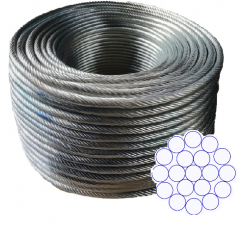
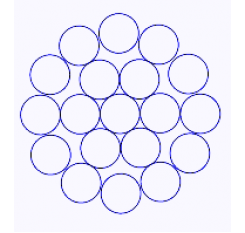
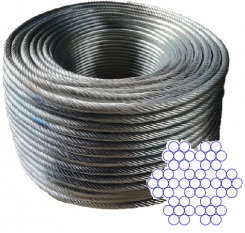
1x19 Stainless Steel Wire Rope
£0.30
This steel rope comes in various sizes, diameters, material and constructions, e..
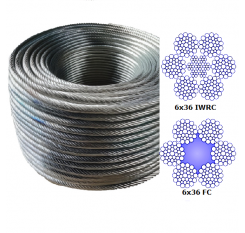
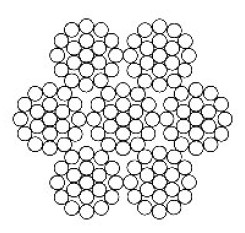
6x36 Stainless steel Wire Rope
£4.14
About the 6x36 Stainless Steel Wire Rope This stainless wire r..
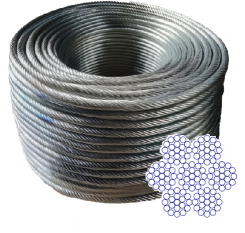
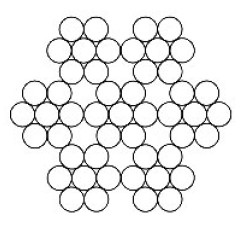
7x7 Stainless Steel Wire Rope
£0.28
Like all of our wire ropes we can add end terminations of your choosing from our..


Stainless Steel Wire Rope Versatility
Stainless Steel Wire is one of the many types of rope supplied by Rope Services Direct. It can be used in a variety of applications, thanks to the versatility of stainless steel and its properties. Perhaps most commonly, it is used in the marine and water treatment industries, but also for yacht railings, rigging parts and for fishing trawlers on their net winches.
Stainless wire is also commonly used around the home and garden, for things such as plant trellising and in architecture / building design, such as for barriers and balustrades. Lesser known industries it is used in include chemical processing plants, food and beverages, railways, bridge building, spacecraft, medicine, energy, culinary and many more.
Stainless Wire Construction and sizes
The versatility of stainless steel wire rope lies in its various construction options, each designed to meet specific operational requirements. These ropes are available in multiple configurations, with the numbers indicating how many strands and wires comprise the rope's structure.
At Rope Services you will find the 4 most popular constructions which are 1x19; 7x19; 7x7 and 6x36. So what do these numbers actually mean? The first number indicates the number of strands and the second number indicates the number of smaller wires within each strand. Sometimes you will see some letters after each number, typically WC or FC, this indicates the rope has an independent core and could be made from wire or fibre.
Each rope construction is also available in a wide range of diameters, the bigger the stronger!
Each rope will have a specification table which shows the minimum breaking strength in both kN (kilo-newtons) and kg. Each rope has a 5:1 safety factor.
Calculating rope strength for lifting tasks can be complicated and will depend on what fittings are attached to the rope and how, Thus always consult the professionals if you are using wire rope for lifting.
Choosing the Right Wire Rope Construction
Selecting the appropriate construction depends on your specific requirements. Consider factors such as the degree of flexibility needed, load characteristics, environmental conditions, how you need to use the rope and frequency of use. The slight differences in flexibility between constructions make each suited to particular tasks, ensuring optimal performance when properly matched to the application.
Generally the 7x7 is popular for steering cable, rigging and control cables.
The 1x19 construction is commonly used in marine rigging, architectural applications, guy wires and balustrades.
The 7x19 construction is typically used for crane rope and hoist lines, in construction and marine industries and for industrial equipment.
Finally the 6x36 rope with the wire core is ideal for cranes and hoisting, winches and pulleys, mining & construction tasks and more. If the 6x36 has a fibre core they are commonly used in industrial applications, marine and construction or lifting systems.
We find the 6x36 is the most popular rope in lifting systems.
Wire Rope Stretch and Flexibility
Due to the fact that this type of cable is constructed of individual wires, which are twisted into a strand, the amount of stretch and flexibility will depend on the number of cables used, the properties and the benefits. When the load is first applied, the individual strands bed in, leading to a permanent constructional extension.
Conventional elastic stretch differs. In this case, the extension results from the increase in the length of the individual wires. Stress is relative to strain, meaning if the yield point is exceeded, permanent distortion will occur, resulting in a "necking down" of the cross-section and a dramatic increase in length. If the yield point is not overstepped, the elastic stretch is usually fully recovered as soon as the applied load is removed, meaning the rope will typically return to it usual length. It should be noted that while all the austenitic grades of stain-less steel have some degree of magnetic permeability, their higher chromium content means that they are less prone to work hardening than other grades of stain-less steel. This gives them superior abrasion resistance and makes them ideal for use in demanding environments.
There can be many advantages to pre-stretching or pre-stressing wire rope prior to installation. These advantages can be grouped into two main categories, improved fatigue life and higher breaking strength. If you are looking for a wire rope that is fit for purpose, expertly made and competitively priced, get in touch with Rope Services Direct today! We are more than happy to advise you on the most suitable product needs.
Stainless Steel Wire Fittings
Wire rope and fittings are what we do best! Thus to compliment your stainless rope we supply a wide range of stainless steel rope fittings to suit all rope sizes. We have our own industrial press facilities and thus can professionally fit your chosen fitting to your rope to provide a custom wire rope assembly to suit your needs.
Our range of fittings includes ferrules, thimbles, sockets, swivel fittings, a range of hooks, shackles, rope grips and more. See our fittings page to see the full collection.
Stainless Steel Wire Rope – FAQs
Is stainless steel cable really tough?
Absolutely. Our AISI 316 stainless steel
ropes combine impressive tensile strength with top-class corrosion resistance
and are thus suited for demanding tasks in marine, architectural, and
industrial environments.
The magic is in how they are built: many
thin wires twist into strands, and such strands form the rope. This spreads
loads and keeps performance consistent, even when tension has been extended
over a long time. Different constructions offer varying strength
characteristics – for example a 1x19 arrangement provides maximum strength for
applications such as yacht mast stays, while a 7x19 construction sacrifices a
little stiffness to achieve greater flexibility, ideal for rigging and
controls.
Breaking strength is related to diameter and construction. A typical 6mm 7x19 rope has a minimum breaking load of around 2,000kg with larger diameters handling far more. Working load limits are generally set at a safety factor of 5:1 or 7:1 of the breaking strength, depending on what you are doing and the regulations you must comply with.
What is stainless steel wire used for?
Stainless steel wire rope is very versatile,
valued for its strength, corrosion resistance, and clean appearance. In
boating, it’s common for yacht rigging, mast stays, rails, and net winches on
fishing boats due to its resistance against seawater, where galvanised steel
cannot compete. Architecturally, it’s finding more and more applications in
balustrades, safety barriers, decorative tension features, cable railings in
offices and homes-all these offer a sleek, contemporary sheen. Home or garden,
plant trellises, pergola supports, and decorative touches are all ideal
applications for this material when durability and aesthetics are of concern,
with the added bonus of not staining walls or paving. You can also find it in
industry for chemical plants, food and beverage installations where hygiene is
essential, water treatment, and as control cables in a variety of machines.
There are less obvious applications in railways, bridges, medical and aerospace
components, even professional kitchens. With several constructions available,
there’s almost always a stain-less steel wire rope available for any project
that requires strength, durability, and corrosion resistance.
Is stainless steel wire 100% rust-proof?
Not quite. Stain-less steel wire rope resists
rust very well, but "100% rust proof" is not quite right. It is more
accurate to refer to it as "stain-resistant." The protection comes
from chromium in the alloy; our 316 grade has a strong presence. Chromium
essentially forms a thin, invisible oxide layer on the surface when it
encounters oxygen that shields the metal. If the surface gets scratched or
otherwise damaged, this layer regenerates and continues to protect. Grade 316,
used throughout, provides extra resistance against chlorides and marine
environments due to the added molybdenum content. But under extremely
aggressive chemicals, carbon steel contamination (tea-staining), or conditions
of poor oxygen, you may still experience superficial discoloration, or in
extreme cases, corrosion. Regular maintenance-particularly near the sea-keeps
the protective layer intact. In practice, properly specified and maintained
stain-less steel wire rope can often survive for much longer-in some cases,
decades-longer than galvanised options in corrosive environments, justifying
the upfront cost.
How much does our range of stainless
steel wire cost?
Pricing starts at around 30p per meter, so
it's really quite affordable for many uses. Factors affecting price include:
- Diameter: Smaller diameter ropes - 1–3mm -
might be upwards of 30–50p/m. The most regularly used ropes, around 4–8mm
diameter, have a wide range from 50p up to £2 per metre. Larger diameters
increase in price because more material is used.
- Construction: 7x7 and 7x19 are our popular
mid-price choices for general use. The 1x19 is simpler and stiffer and can be
cheaper for some sizes. More complex builds like 6x36 cost more because they
are harder to manufacture. –
-Quantity: There are better rates for bulk
orders and trade accounts. Longer continuous lengths are generally cheaper than
many shorter pieces.
- Specifications: The standard is 316
marine-grade stainless steel, but it also depends on custom requirements,
certificates, or unusual specifications.
For detailed pricing for your
specifications, please visit the product pages of our website. All prices are
per metre to enable you to easily cost your project. We also manufacture custom
assemblies including wire rope with end terminations, eyes, ferrules or sockets
made according to your specifications. If you plan a larger project or regular
supply, contact our team for competitive bulk pricing or ongoing arrangements.