Rigging Screws & Turnbuckles
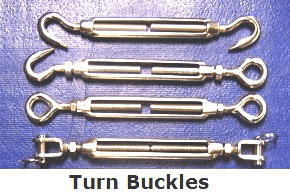
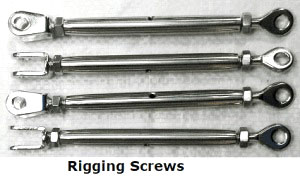
Rope Services Direct supply a range of rigging screws and turnbuckles. They come with a variety of fittings for each end to suit your particular application, for example; eye +eye, eye + hook, jaw + jaw, Hook + jaw, etc. Some rigging screws are fitted with locking nuts/barrel strainers to ensure that there is no unwanted loosening of the rope.
All rigging screws can be used for tensioning tasks, however not all can be used for lifting purposes so please ensure you check the details carefully.
As standard we supply 5MM, 6MM, 8MM and 10MM screws in mild and stainless steel, Some are available from M4 up to M20 sizes. But please do ask us if you need anything custom-made. As well as standard commercial galvanized and stainless steel tensioning products we also supply Green Pin turnbuckles as well a some US style rigging screws so we have something to suit every pocket and scenario.
We are always available for clarification on any wire rope fitting and for order taking on 01384 78004, we look forward to hearing from you!


What is a Turnbuckle and Rigging Screw?
Rigging screws and turnbuckles are sometimes referred to as a wire rope tensioner, bottle screws, barrel strainers or straining screws. They are a special type of fitting which are used to enable the tensioning of wire ropes. Once fitted the tension of the rope can easily be adjusted whenever you need to. Whether it is to tighten or loosen the rope. All that is needed is to turn the main body or barrel.About Rigging Screws & Turnbuckles
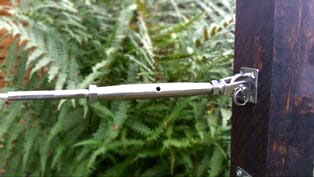
Turnbuckles and/or rigging screws are commonly used in rigging applications and anywhere that the wire will need tightening. Usually to a unique rigidity to fit its objective, for example, bridges, balustrades, staircases and hanging shelves. They are often utilised for use as barriers (instead of fencing) to avoid access to certain areas. Or sometimes as a safety barrier, but are easy on the eye. For example they are used on castle ramparts to allow the public to be able to walk around them safely. Yet they do not intrude too much on the original nature of the buildings.
Common Applications and Industry Uses
Other than the traditional uses in marine rigging and architectural applications, rigging screws and turnbuckles find extensive use in theatrical rigging. Precise tensioning of flying systems and backdrop supports is essential for safety. The entertainment industry commonly uses these types of fittings, especially when touring, where quick setup and reliability is essential.
Other uses include agricultural settings, where farmers may use rigging screws for tensioning fence lines to keep livestock contained. Consistent tension prevents sagging that could compromise security. The adjustability feature allows for seasonal expansion and contraction. whilst maintaining fence security.
Types of Turnbuckles and Rigging Screws Available
Turnbuckles and rigging screws are typically used for tensioning tasks, however some products can be used for lifting applications too like the Green Pin tensioners.
There are a number of different options to consider when choosing your tensioning product but the material they are made from and the quality can make all the difference. Commercial, galvanized tensioners are ideal for more industrial applications. Stainless steel tensioners are more suited to outdoor or clean environments or public areas as they are more appealing to look at. Probably one of the best known types of rigging fittings are the Green Pin branded products ; known for their quality, strength and durability. Additionally they are capable of lifting as well as tensioning thus, used across the world. For similar specification products with typically lower price tags are the US style turnbuckles - find them above and compare away.
What is the difference between Rigging Screws & turnbuckles?
Rigging screws have the closed barrel type centre and so look more aesthetically pleasing whilst Turn buckles have an open body/centre piece which turns around the visible screws. The definition of a turn buckle is type of coupling which possesses internal screws that are used to connect two wires or rods, end to end in order to adjust the tension.
Rigging Screws
Rigging Screws are usually used for the tightening/ tensioning of wire ropes. These types of wire rope fittings are frequently utilised for rigging tasks or wherever a rope may require tensioning to a specific rigidity, for example; bridge wires, stair balustrades, barriers/fences or hanging/floating shelving. They are designed for in-line & straight rigging and tensioning & are available in different combinations including Eye & Eye & Eye & Jaw. These are available in different sizes in mild steel or stainless steel.
Galvanised Steel vs Stainless Steel Turnbuckles and Rigging Screws
When choosing between galvanised steel and stainless steel rigging screws your choice will depend on your environment and budget considerations. Mild galv. steel options provide high strength, typically at lower prices, thus ideal for indoor tasks or temporary installations where corrosion resistance isn't necessary. However, should you need them for marine type environments, outdoor installations, or other high moisture areas, stainless steel rigging screws are the best option as they offer optimum corrosion resistance.
Installation and Maintenance Guidelines for Rigging Screws & Turnbuckles
When fitting rigging screws and turnbuckles, proper setup is necessary for safety. Prior to installation, always inspect each component thoroughly for any signs of damage, corrosion, or manufacturing defects. These checks can prevent potential failures that could compromise the whole rigging set up.
Load Calculations and Safety Factors
Load requirements is an important factor to consider when selecting the appropriate rigging screw or turnbuckle for your application. The working load limit (WLL) should never exceed the manufacturer's specifications. Applying appropriate safety factors is highly recommended and will depend on how you intend to use them. For critical applications such as public access areas, we recommend using higher safety margins to account for unforeseen problems.
Inspection and Maintenance Protocols
Regular inspections should take place, before, during and after use. For high-traffic areas or safety-critical applications, monthly inspections are highly recommended. Check for thread wear, corrosion, and proper adjustment for the correct tension. The threads should move freely without any binding.
If corrosion is detected early enough, a proper clean and re-lubrication can sometimes restore full functionality. However, any rigging screw or turnbuckle shows thread damage, cracks, or excessive wear should be discarded and replaced immediately.
Custom Solutions and Technical Support
At Rope Services Direct, we understand that standard configurations don't always meet every application requirement. Our technical team can usually help with custom combinations, special materials, or non-standard sizes to suit your specifications. Whether you're dealing with building restoration or industrial applications requiring specific load ratings, we can provide tailored solutions.
For technical guidance or to discuss your specific requirements, our experienced team is available on 01384 78004. We're committed to ensuring you select the right rigging hardware and other rope fittings for your application, providing both technical expertise and competitive pricing to support your project success.
There are no products to list in this category.